Participatory research and community engagement in climate and health research
 Article


Climate change is a health crisis, but policy responses have been slow to recognise it as one. At the 20th International Conference on Community-Based Adaptation (CBA20), held in Manila from on 11t to 14 May 2026 in Manila, Dr Anh Vu, Principal Investigator of the project, spoke on a Wellcome Trust panel titled From Evidence to Action: Driving Urgent Climate and Health Policy Change.
Our project is generating the first national evidence base on the health impacts of climate change on informal outdoor workers in Vietnam's megacities. Street vendors, motorbike taxi drivers, construction labourers, waste collectors and porters keep urban economies running, yet they have almost no formal social protection and are largely invisible in policy conversations. We call them "living barometers." After decades working outside, they carry knowledge about climate and health that no weather station can produce.
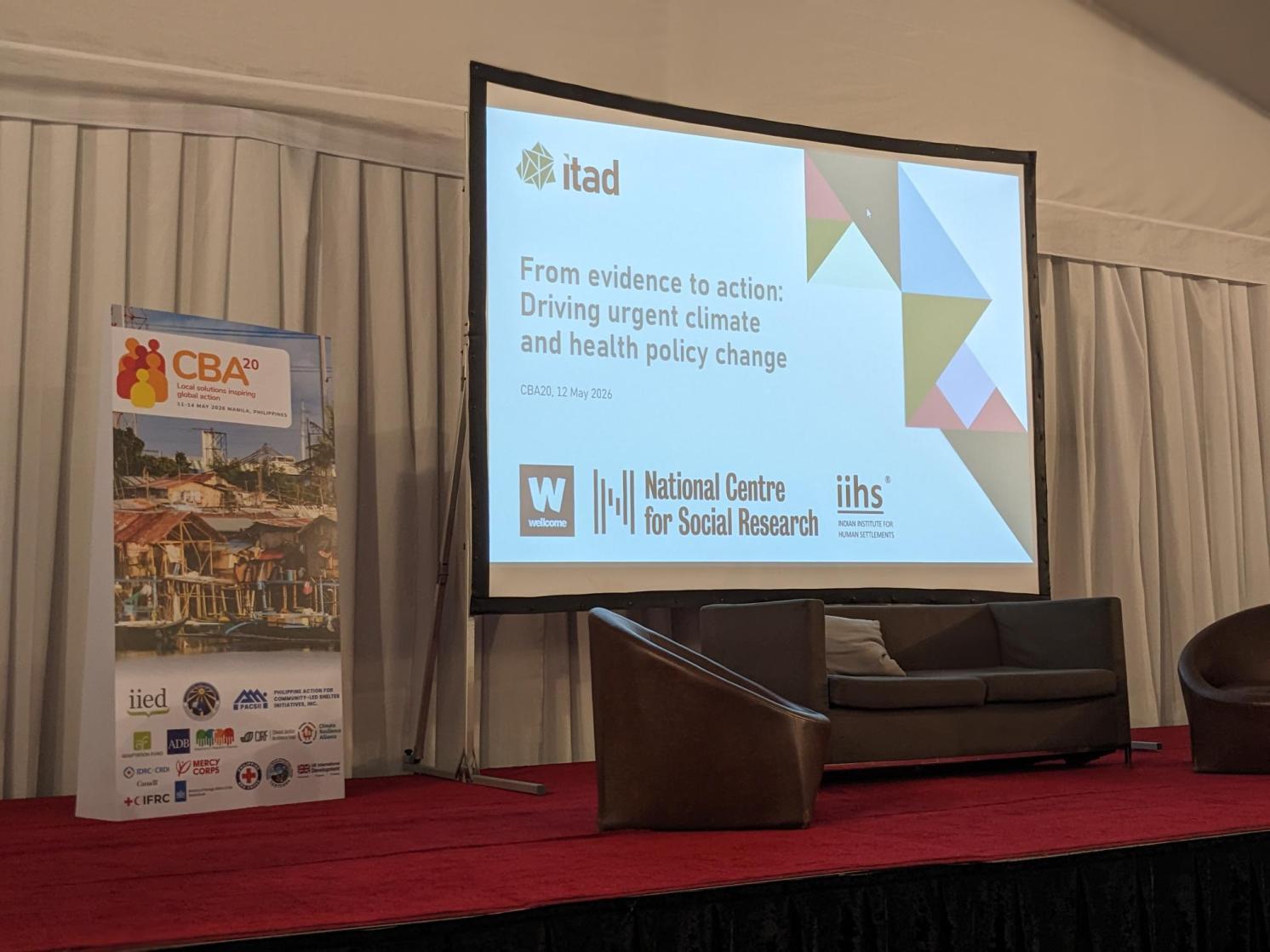
The panel session explored a question at the heart of our work: what does it actually take to turn climate and health evidence into policy change? Dr Vu shared the project's approach to embedding policymakers as co-producers of the research from the outset, so that by the time a recommendation reaches their desk formally, they have already helped shape it. She discussed how the team works multiple channels simultaneously, from national scientific conferences where senior officials host proceedings, to roundtables that bring researchers, policymakers, workers and journalists together on equal terms, to strategically timed commentary in Vietnam's major newspapers, which can reach a minister faster than a formal policy brief.
A key theme was the value of genuine co-construction with workers. Through sustained, trust-based collaboration, the project discovered that workers set their own heat thresholds far higher than medical guidance recommends, because standard advice assumes a workplace where you can rest, find shade and drink water. For informal outdoor workers, stopping in the middle of the day means losing income and going without food. That single insight shifted the project's policy recommendations from advising rest breaks to proposing income-support mechanisms on extreme heat days.
The discussion was equally frank about challenges. Vietnam's March 2025 administrative restructuring dissolved key ministries and wiped out over half of the project's established policy contacts overnight. Rebuilding those relationships with new officials who have no background in the issue takes time that project timelines rarely account for. And reframing heat stress as a question of occupational safety and social protection, rather than simply a meteorological problem, remains an ongoing battle.
There is real momentum, however. Vietnam is beginning to shift from a charity model toward rights-based access for informal workers. In September 2025, the Politburo adopted Resolution 72-NQ/TW, mandating free annual health check-ups or screenings for all citizens from 2026, with electronic health records for lifetime health management. For outdoor workers who have historically fallen outside formal health systems, this is a significant policy opening. Local leaders, particularly in Da Nang (one of our research sites), are also showing progressive thinking on climate, health and labour protection, and these local precedents are among the project's most powerful tools for advocating policy change to protect workers' health.
Over 100 participants then joined an interactive discussion that moved beyond diagnosis into problem-solving: identifying concrete entry points for cross-sector action, debating how to resource and sustain local innovations, and grappling with the persistent challenge of making policy processes genuinely inclusive of the communities most affected by climate change.
For our team, CBA20 was both affirming and grounding. The connections made and the candour of the discussions reinforced what our work in Vietnam continues to teach us: that the distance between good evidence and good policy is not bridged by dissemination alone, but by trust, timing and a willingness to stay the course.
Article
 Article
