Living with extreme weather: Health vulnerabilities and everyday adaptations of informal outdoor workers in urban Vietnam


Informal outdoor workers sustain the daily life of Viet Nam’s cities. Street vendors, motorcycle-taxi and delivery drivers, construction workers, porters and waste collectors work through extreme heat, heavy rain, flooding, storms, air pollution and, in Hanoi, periods of severe cold. Yet their health and protection needs cut across climate adaptation, public health, labour regulation and social protection, making coordinated action essential.
In our Wellcome-funded project, policy engagement was treated not as a final stage of dissemination but as an integral part of the research. From the outset, evidence was developed iteratively with outdoor workers, medical associations, public health institutions, local authorities and community-based organisations. Emerging findings were tested against workers’ experience, local governance and the practical capacity of existing institutions, allowing them to be translated into policy options that were locally relevant and institutionally feasible.
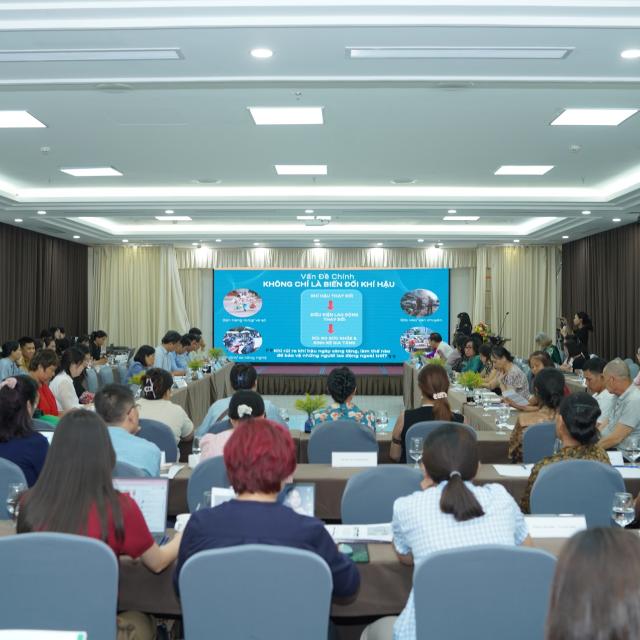
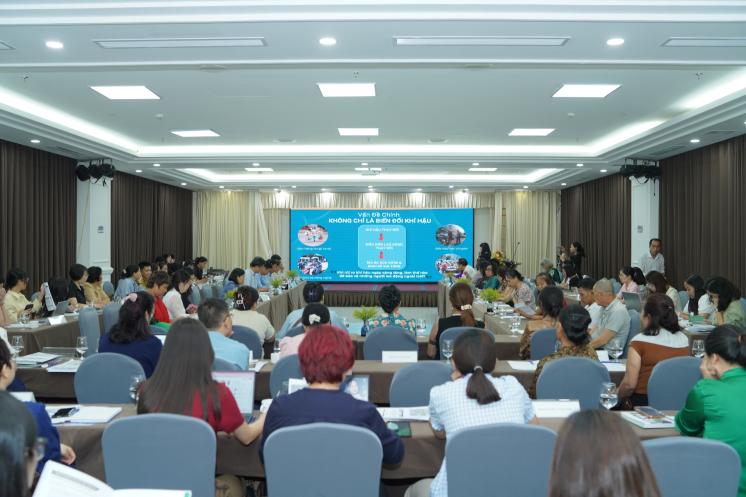
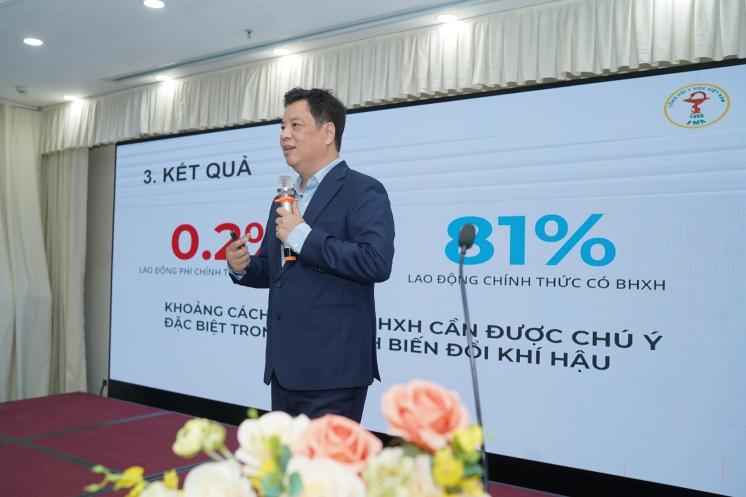
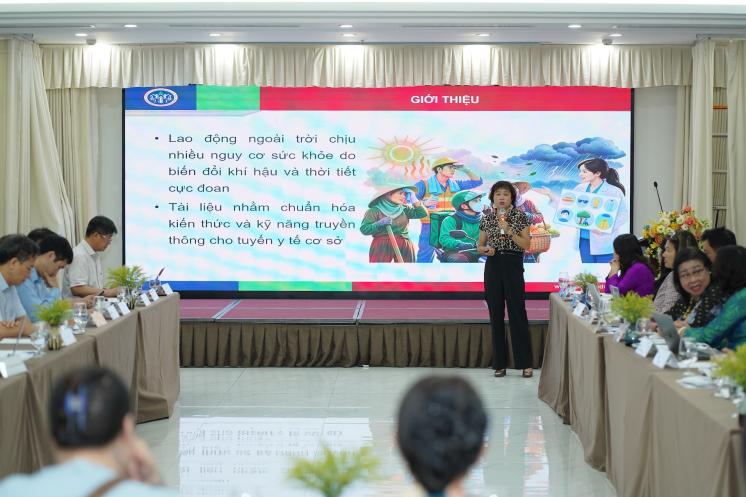
The project transformed four-city research into a structured programme of policy engagement. City forums in Can Tho, Ho Chi Minh City and Da Nang brought outdoor workers into direct dialogue with policymakers, health leaders and practitioners, recording 160 attendances across the three events. These locally grounded discussions then informed a national conference in Hanoi, which carried the four-city evidence into central policy debate and convened approximately 120 participants, including representatives of 15 media organisations. Together, the city and national forums generated approximately 279 attendances and created rare spaces in which workers could present their experiences directly to the institutions responsible for health, labour and social protection.
The city forums showed that outdoor workers face a shared protection gap, but that effective responses must reflect local climate hazards, labour conditions and institutional capacity.
In Can Tho, discussion connected prolonged heat, heavy rain, high tides and flooding with insecure livelihoods and limited access to social protection. Local leaders considered the research a credible account of informal workers’ living and working conditions in the Mekong Delta. The Viet Nam Fatherland Front in Can Tho called for coordinated action across healthcare, social protection and sustainable livelihoods, supported by cooperation among public authorities, social organisations and communities.
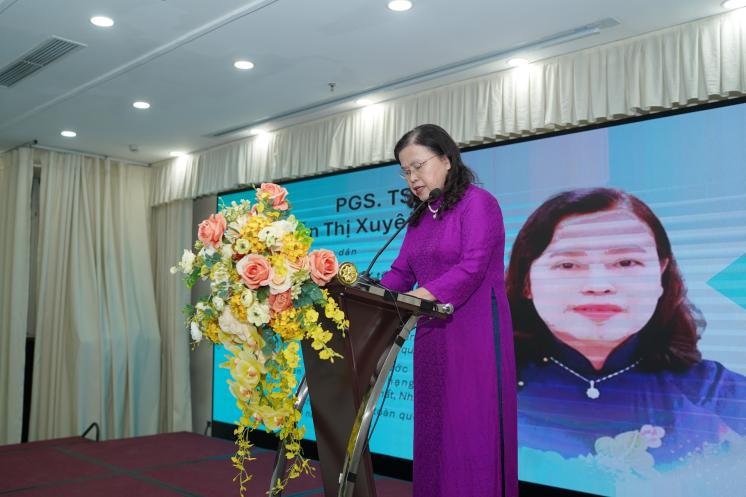
The forum connected evidence on extreme heat, air pollution, flooding and app-based work with questions of institutional responsibility. Former Minister of Health Professor Trần Thị Trung Chiến described the research as important initial evidence and urged the submission of concise recommendations to National Assembly bodies and People’s Councils. She also proposed stronger collective representation for street vendors, motorcycle-taxi drivers and construction workers, and encouraged the health sector to act on the available evidence rather than wait for complete certainty.
The Chair of the Ho Chi Minh City Red Cross Society argued that climate responses must extend beyond infrastructure to include health and social security. The discussion also recognised that cities need enabling national frameworks because several protections cannot be introduced through municipal action alone.
In Da Nang, the Director of the Department of Health said the findings revealed important gaps despite the city’s established social policies. The Department identified the potential for climate-adaptive, worker-friendly health stations and indicated that it would examine local conditions, possible links with existing hypertension and diabetes programmes, and the inclusion of workers’ mental health.
Da Nang Centre for Disease Control proposed collaboration on local assessment, development of an assessment toolkit and pilots in selected areas. The city Medical Association supported the recommendations but emphasised that implementation would need to proceed gradually, mobilise additional resources and receive national support.
Together, the forums established a clear principle: national standards are needed to secure consistent protection, but implementation must be adapted to local risks, institutions and worker populations.
The national conference in Hanoi brought evidence from all four cities into dialogue with central government agencies, health institutions, professional bodies, researchers, civil society, workers and the media.
The debate moved beyond identifying vulnerability to determining responsibility. The Deputy Director General of the Ministry of Health’s Department of Disease Prevention observed that informal outdoor workers remained largely absent from legal definitions and policy documents. The research team was asked to identify provisions that could be strengthened, particularly in occupational safety and health legislation under revision.
Participants proposed:
Participants also recognised the limits of the available evidence. Cross-sectional surveys cannot establish causation, and future research combining workplace climate monitoring with clinical and longitudinal data would strengthen understanding of health effects.
Across the city and national forums, outdoor workers’ health was reframed as a shared institutional responsibility. Individual knowledge alone cannot reduce exposure when workers lack secure incomes, safe places to rest, affordable healthcare and collective representation. Effective protection therefore requires coordinated action across health, labour, environment, social security, finance, urban planning and local government.
The process produced five policy-recommendation documents: one national package and four tailored to Hanoi, Da Nang, Ho Chi Minh City and Can Tho.
Together, they call for:
The recommendations do not propose a separate protection system. Instead, they seek to integrate outdoor workers’ health into existing institutions and programmes, including primary healthcare, climate-adaptation planning, occupational safety regulation, health and social insurance, employment support and local social protection. The central argument is that durable protection depends on coordinated action across these systems and on making them more accessible to informal workers.
The forums achieved more than dissemination. They created structured spaces in which outdoor workers could present evidence directly, question public authorities and influence discussions about health, labour, social protection and local development. Decision-makers heard how hazardous weather affects workers’ health, incomes, care responsibilities and ability to seek protection.
In Da Nang, health authorities identified practical steps towards local assessment and worker-friendly health-service pilots. Nationally, sustained engagement contributed to a government-led pathway for testing climate-health guidance for frontline health officials through four Centres for Disease Control.
Legal reform and wider implementation will require continued political commitment, funding and evaluation. Nevertheless, the project has established an evidence-based policy agenda, strengthened direct dialogue between workers and decision-makers, and created credible institutional routes for action.
The recommendations published here (see attached) combine city-specific evidence on workers’ climate exposure, health risks and protection gaps with policy measures tailored to Hanoi, Da Nang, Ho Chi Minh City and Can Tho. The national recommendations connect these local priorities into a coordinated agenda for Viet Nam. Collectively, they clarify what needs to change, which institutions need to act, and how existing health, labour, social-protection and local-government systems could deliver protection adapted to local conditions.
Read five policy recommendations here:

 Article